
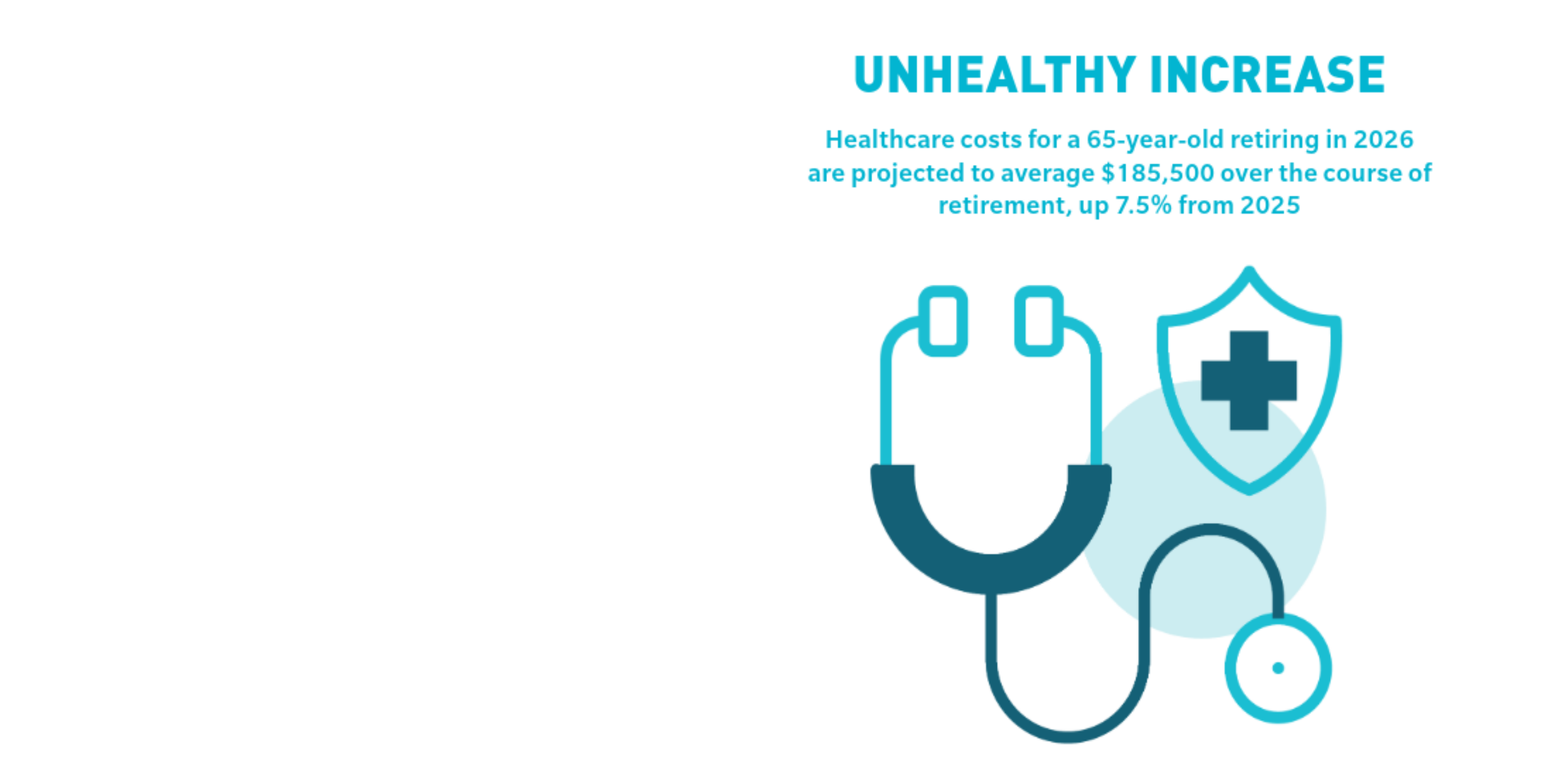
Health care costs for a 65-year-old retiring in 2026 are projected to average $185,500 over the course of retirement, up 7.5% from 2025. Medicare Parts B and D premiums make up 45% of that total, other out-of-pocket medical costs (copays, coinsurance, deductibles) account for 48%, and out of-pocket prescription drug costs make up the remaining 7%. (Source: Fidelity)
|
1. SAVED UP BUT SKITTISH. 42% of Americans worry that they will regret spending too much money early on in their retirement, and 39% of current retirees are reluctant to spend money in order to preserve as much of their savings as possible. 77% of Americans, however, say that a guaranteed income stream during retirement would lessen their concerns about spending. (Source: Allianz)
2. WHO NEEDS A PLAN? 50% of pre-retirees lack a meaningful or recently updated plan to generate income in retirement, and 76% have no plan or have spent less than five hours planning in the last year. Among consumers who have worked with a financial advisor or planner, however, 77% feel prepared for retirement compared to just 47% who haven’t. (Source: LIMRA)
3. STILL TREADING WATER. US public pension funds are projected to finish 2026 with a funded ratio of 85.0%, the highest since 2009. Despite this improvement, however, nearly 60% of public plans remain fragile or distressed. In total, public pension funds remain $1.13 trillion short of being fully funded, which is just $210 billion better than the $1.34 trillion gap in 2009. (Source: Equable Institute)
4. NO HOUSE, NO PROBLEM. More than a third (34%) of Gen Z Americans doubt they’ll ever afford a home, yet they’re the most confident generation on retirement, with 58% expecting to be prepared. Getting an early start explains the confidence: the average Gen Z-er has started saving at age 22 and aims to retire at 61, versus ages 31 and 65, respectively, for the average American. (Source: Northwestern Mutual)*
5. FREEZE AGAINST FRAUD. The House passed the Financial Exploitation Prevention Act of 2025 by a 414–2 vote in late June. If signed into law, it would let mutual funds and most ETF companies pause redemptions for adults 65+ or those with disabilities on suspicion of financial exploitation. The FTC says adults over 60 reported $2.4 billion in scam losses in 2024, up 26.3% from 2023. (Source: CNBC)
6. THIS ONE GOES TO 11. Annuity sales in the US rose 4% year/year in Q2 to a record $123.9 billion, marking the 11th straight quarter above $100 billion. RILA (registered index-linked annuity) sales hit a quarterly record of $23.3 billion, up 22% y/y. June alone saw the second-highest monthly total on record for RILAs, with sales up 15% relative to May and 30% y/y. (Source: LIMRA)
7. JERSEY SAFE. From 2015 through 2025, property crimes against individuals aged 60+ increased 63%, while the violent crime rate increased 292%. In a CareScout safety analysis that included factors like elder fraud, crime, falls, roadway safety, hospital access, and police staffing, New Jersey, New York, and Rhode Island ranked as the safest states to retire in, while Arizona ranked last. (Source: CareScout)
8. SAFE BUT STEEP. Though it ranks as the safest state to retire in, a separate CareScout study earlier this year that factored in affordability, quality of life, and health care also found that New Jersey is the worst state to retire in, citing high living costs, a steep top tax rate, and poor health outcomes for older residents. Wyoming ranked best, followed by New Hampshire, Vermont, and Montana. (Source: CareScout)
9. SPENDING YOUR INHERITANCE. Baby Boomers are expected to transfer up to $84 trillion to their heirs over the next two decades, but those forecasts may understate the impact of eldercare costs. From 2017–2022, 11% of older Americans died with nothing to pass on, and that was nearly double the 6% rate for the 2006–2010 cohort. (Source: Washington Post)*
QUESTION: In a study completed by the Investment Company Institute (ICI) of 2.1 million 401(k) plan participants who maintained accounts continuously from 2016 through 2022, 36% were fully allocated to target date funds (TDFs) at year-end 2016. What percentage of those participants remained fully allocated to TDFs by the end of 2022?
*According to the US Census, Baby Boomers are those born between 1946–1964, and Gen Z includes those born between 1997–2012.
Keep in mind that all investments, including mutual funds, carry a certain amount of risk including the possible loss of the principal amount invested. These views should not be relied upon as investment advice, as securities recommendations, or as an indication of trading intent on behalf of any other MFS investment product. No forecasts can be guaranteed. Past performance is no guarantee of future results.
MFS® does not provide legal, tax or accounting advice. Clients of MFS should obtain their own independent tax and legal advice based on their particular circumstances. This has been provided for informational purposes only, and reflects the current opinion of the author, which is subject to change without notice, as are statements of financial market trends, which are based on current market conditions. Past performance is no guarantee of future results. Integrated Retirement is not affiliated with MFS Investment Management® or any of its subsidiaries.
Distributed by: U.S. - MFS Fund Distributors, Inc., Member SIPC, Boston, MA.
Please note that in Canada this document is intended for distribution to institutional clients only. Note to readers in Canada: Issued in Canada by MFS Investment Management Canada Limited.